
Mid-cities lawns
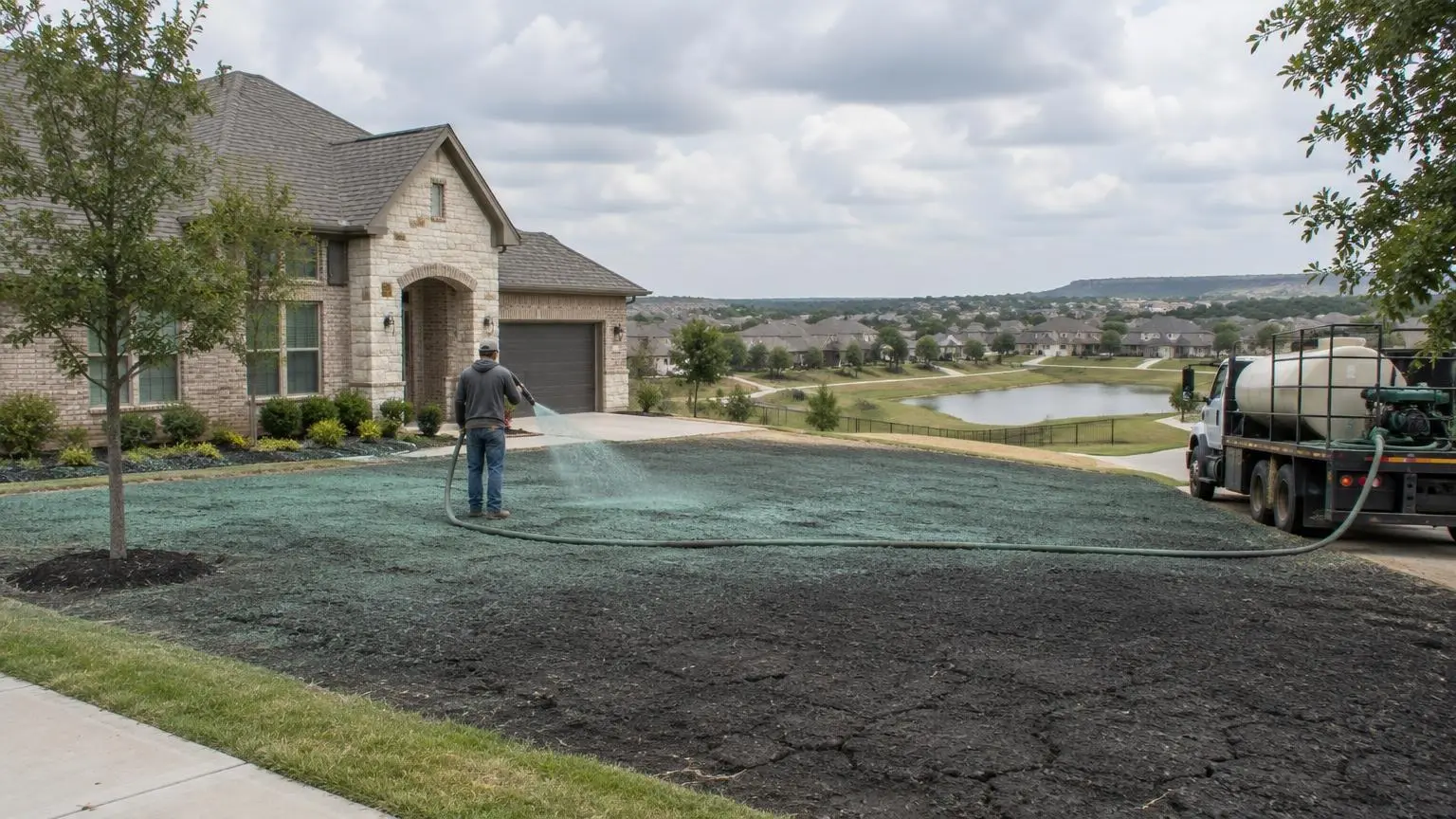
Hydroseeding in Arlington, TX
A city that grew fast after 1950, with creeks feeding the Trinity.
- No-cost site visit and a written quote
- Quotes split into prep, seed, mulch and erosion items
- Seed mix and timing planned for North Texas heat
Renewing Lawns in the Mid-Cities
Hydroseeding in Arlington is mostly renewal work on established ground. The city was founded on the Texas and Pacific Railway in 1876 and grew as a cotton-ginning and farming center because the area's rich soil drew farmers. After a General Motors plant arrived in 1954, Arlington had one of the nation's fastest growth rates through 1990. Many neighborhoods from those decades now have lawns that need renovation.
Older yards
Yards from the 1960s through the 1980s often have settled grades, compacted soil, heavy shade and decades of thatch. We remove dead turf, loosen the soil, add topsoil, correct drainage away from the house and hydroseed for an even new lawn. Where the base is solid, overseeding thin areas can do the job.
Creeks to the Trinity
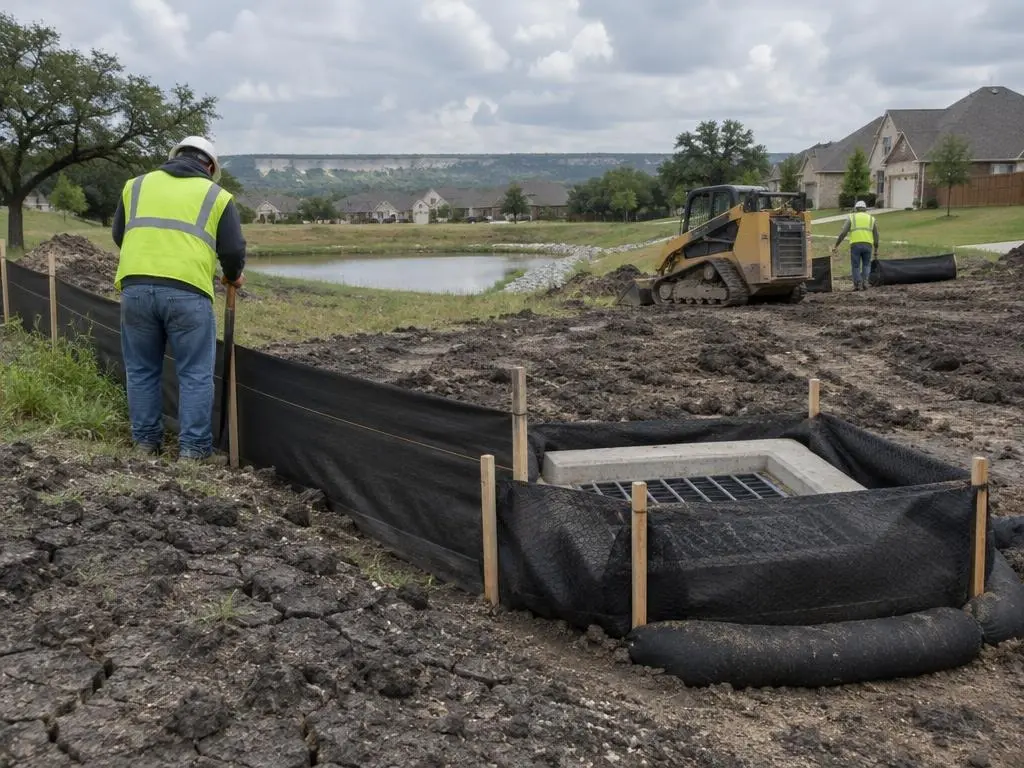
Johnson Creek, a tributary of the Trinity River, flows through Arlington, and the Trinity itself crosses the city. The 1841 battle at the Village Creek settlement led to a trading post at Marrow Bone Spring, showing how long these creeks have shaped where people settled. Creek-side lots need erosion control blankets on banks and silt fence during grading.
October rain
Arlington's maximum average precipitation comes in October. That makes early fall a good window for overseeding and lawn repair, since cooler days and rain help new grass along. A full renovation of a warm-season lawn still gets its strongest start in late spring, so we often split the work: fix grade and drainage in fall, then seed the new lawn when soil warms.
Commercial sites
Large venues, campuses and redevelopment projects across the city leave disturbed ground that needs stable cover at the end of a job. We handle hydromulch, bonded fiber matrix and inlet protection on commercial sites.
For lawn renovation or a commercial site in Arlington, get a free estimate or call (469) 210-5759.
Arlington Land and Weather
- Rich soil. The rich soil of the area attracted farmers, and agriculture-related businesses were well established by the late 1800s.
- Johnson Creek. Johnson Creek, a tributary of the Trinity River, and the Trinity itself flow through Arlington.
- October rain. Arlington's maximum average precipitation occurs in October.
- Postwar growth. After the 1954 General Motors plant, Arlington had one of the nation's greatest growth rates between 1950 and 1990.
Arlington Questions
Is fall a good time to repair my Arlington lawn?
Yes. October is Arlington's wettest month on average, which helps overseeding and repair.
My 1970s Arlington lawn is mostly thatch and weeds. Can it be saved?
Usually with a renovation: remove the old turf, loosen soil, add topsoil and hydroseed.
Do you seed along Johnson Creek?
Yes. Creek-side banks get blankets and seed; silt fence protects the channel during grading.
Can you hydroseed commercial property in Arlington?
Yes. We cover slopes, ponds and islands with hydromulch or bonded fiber matrix.
Free Estimates in Arlington, TX
Free estimates for Arlington homes and businesses.
Hydroseeding Near Arlington
- Hydroseeding in Dallas, TX
- Hydroseeding in Frisco, TX
- Hydroseeding in McKinney, TX
- Hydroseeding in Plano, TX
- Hydroseeding in Prosper, TX
- Hydroseeding in Celina, TX
- Hydroseeding in Rockwall, TX
- Hydroseeding in Allen, TX
- Hydroseeding in Garland, TX
- Hydroseeding in Rowlett, TX
- Hydroseeding in Wylie, TX
- Hydroseeding in Forney, TX
- Hydroseeding in Little Elm, TX
- Hydroseeding in Cedar Hill, TX
- Hydroseeding in Midlothian, TX
- Hydroseeding in Waxahachie, TX
- Hydroseeding in Mansfield, TX
- Hydroseeding in Grand Prairie, TX
- Hydroseeding in Flower Mound, TX
- Hydroseeding in Mesquite, TX
- Hydroseeding in Lewisville, TX
- Hydroseeding in Denton, TX