
North Texas seed and erosion work
Hydroseeding in Dallas, TX
Bermuda lawns, stabilized slopes and finished builder sites, planned around blackland clay and Dallas heat.
- No-cost site visit and a written quote
- Quotes split into prep, seed, mulch and erosion items
- Seed mix and timing planned for North Texas heat
Grass That Has to Survive Gumbo and July
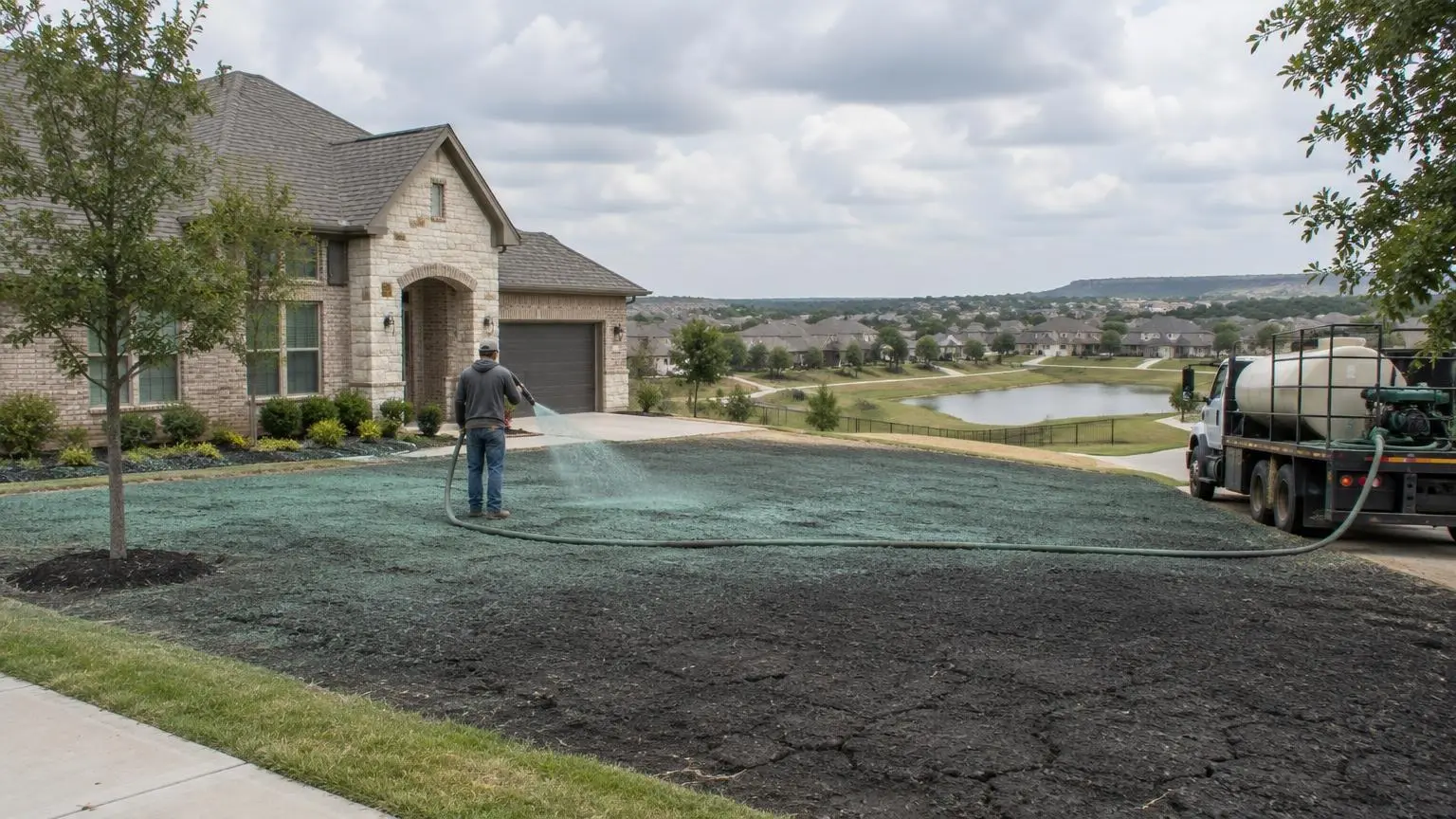
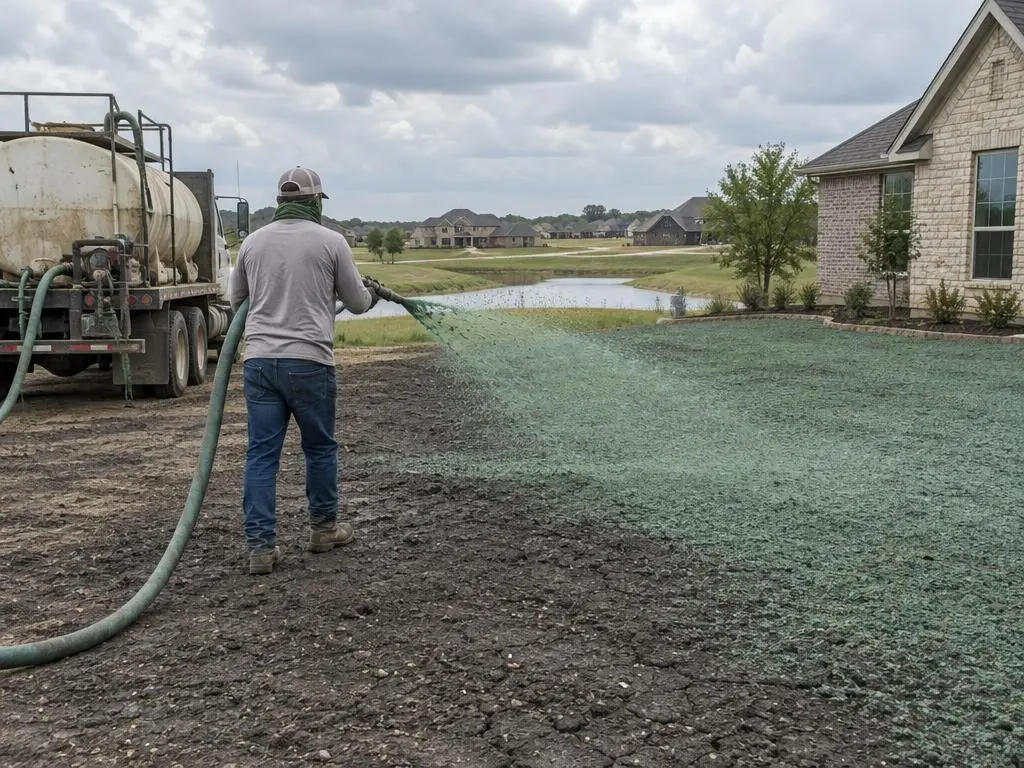
Hydroseeding in Dallas means starting grass on some of the most stubborn ground in Texas. Our hose trucks blend seed, fertilizer, a tackifier and wood fiber mulch into one wet mix and lay it over prepared soil, and the mulch holds moisture against the seed while it sprouts. Elite Hydroseeding Dallas does this for homeowners finishing a new yard, builders closing out lots, and site contractors who need disturbed ground covered and stable. The same crews handle erosion control, silt fence, fine grading and topsoil, and overseeding, because in this city those jobs usually come together.
Black clay that moves
Dallas is part of the Texas Blackland Prairies, a band of grassland that runs about 300 miles from the Red River down toward San Antonio and takes its name from dark soil. Much of it is black or dark gray alkaline clay with vertisol properties: it swells when wet, shrinks when dry, and opens deep cracks during long dry stretches. Locals call it black gumbo for a reason. For seeding that means three things. Clay worked while wet smears and seals, so we wait until it crumbles. A few inches of loose, graded surface matter more than anything else, because seed sitting on a hard crust dries out. And the cracks that open in August can swallow seed and split young turf, so timing the job ahead of that matters.
Flat ground, with one big exception
Most of the city sits between 450 and 550 feet above sea level and drains slowly across flat lots. The exception is the White Rock Escarpment, the western edge of the Austin Chalk, which rises about 230 feet and runs north to south through Dallas County. South of the Trinity River it shapes Oak Cliff, Cedar Hill and Grand Prairie, and it shows again along Turtle Creek north of downtown. Those slopes shed water fast and carry thinner soil over chalk in places. On a slope we raise the mulch rate, add tackifier, and switch to erosion control blankets where hydromulch alone would wash.
Weather that comes in bursts
The 1991-2020 normals at Love Field put yearly rain near 39 inches, but it does not arrive evenly. May averages about 4.6 inches and October about 4.8, while July and August drop to roughly 2.3 to 2.5 inches with average highs near 97 degrees. Spring cold fronts meeting Gulf moisture bring hail and heavy downpours. A freshly sprayed lawn can lose seed in one hard storm, so we look at where water enters and leaves the yard before we spray, and we tell you which spots may need a second pass. Get a free estimate
Sod, hydroseed or dry seed
All three can work here, and the choice is mostly about budget, size and speed. Sod is an instant surface and the most expensive option; HomeGuide's figure for laying it is $1 to $4 a square foot. Hydroseeding typically lands well under that and covers big or irregular areas, slopes and narrow strips that sod crews dislike. Broadcast dry seed is the cheapest, but on bare clay it often blows, washes or gets eaten before it roots, and University of Nebraska Extension notes that hydroseeded areas usually green up within 5 to 7 days, where dry seeding takes two to three weeks. For a Dallas homeowner with a large, bare backyard, hydroseed is usually the middle path: much cheaper than sod, far more reliable than tossing seed onto gumbo.
Seeding windows for warm-season grass
Dallas sits squarely in warm-season grass country. Bermuda, a heat- and drought-tolerant grass grown mostly across the southern half of the United States, is the grass we seed most often in full sun. Bermuda starts actively growing once temperatures stay above about 59 degrees and does best between roughly 75 and 99 degrees; in winter it goes dormant and turns light brown. In Dallas the average last frost is around March 12 and the first frost around November 12. That puts the strongest window for a new Bermuda lawn from about May through early summer, when the soil is warm and May rain helps, with irrigation carrying it through July. Late-summer seeding can still work if the grass has enough warm weeks to fill in before November. Seeding in winter mostly wastes seed; for bare ground in the cold months, we talk about temporary cover and erosion control until spring.
Construction sites and stormwater rules
Builders and site contractors in Texas work under the TCEQ Construction General Permit, TXR150000, which applies when a project disturbs one acre or more and discharges stormwater to surface water. Projects of 1 to under 5 acres and 5 or more acres both have to have a stormwater pollution prevention plan in hand before ground is broken, and a small lot inside a larger subdivision counts toward the whole development's acreage. TCEQ describes those plans as documents that list the best management practices used to control pollutants in runoff; on most sites we see, that means silt fence, inlet protection and, at the end, vegetation. We install the pieces the plan calls for and seed the disturbed ground so the site can be closed out.
Lakes, creeks and the Trinity
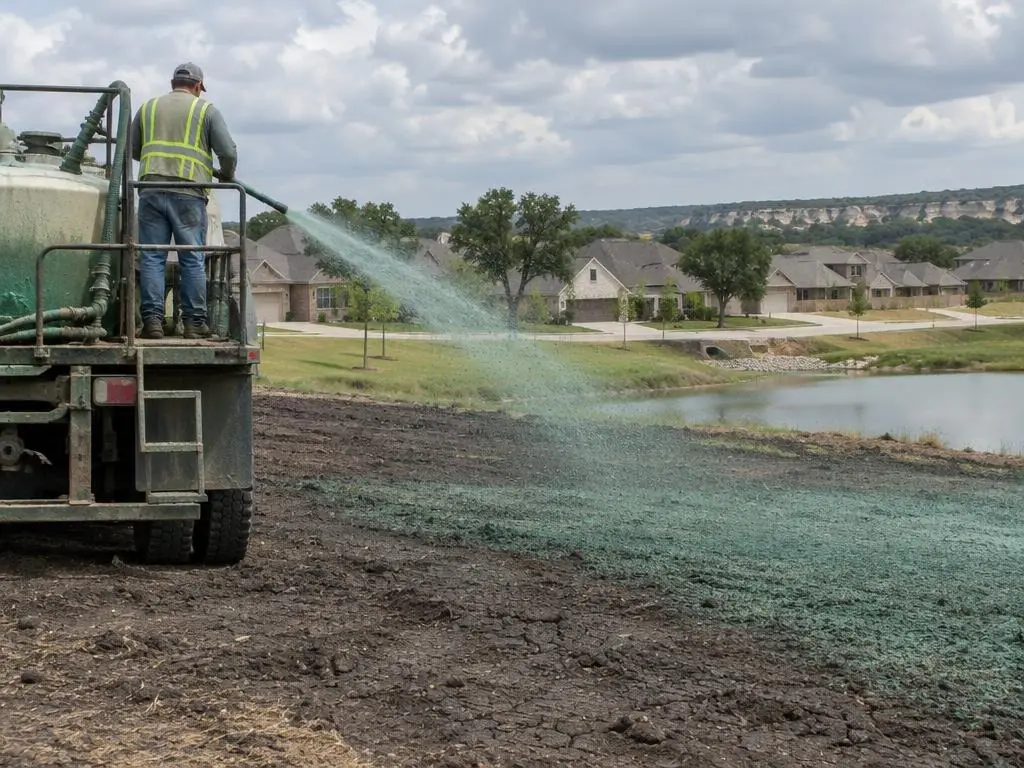
Water shapes the metro as much as clay does. Dallas was founded at a white rock crossing of the Trinity River, and the river is now flanked by earthen levees about 50 feet tall to protect the city from floods. The Trinity River Project covers some 44,000 acres, about a fifth of the city's land, with roughly 10,000 acres of green space along the river. Around the edges of the metro, Lake Ray Hubbard, Lewisville Lake, Lavon Lake and Joe Pool Lake pull new neighborhoods toward their shorelines. All of that means a lot of yards that drain toward a creek, channel or lake. Hydro seeding on those lots is about more than a green lawn: it is how bare soil stops washing downhill after the next spring storm. Near a creek or drainage easement we leave a bigger margin for error, heavier mulch on the slope, blankets in the flow line, and a frank note about which strips may need a touch-up after the first big rain. Grass seeding beside water also tends to stay wetter, so we watch for spots where the clay stays soft and adjust the grade before we spray.
What a visit covers
We look at the soil surface and how hard it is, slope and drainage paths, sun and shade from mature trees, irrigation coverage, and access for a hose truck. Afterward we send a written quote that itemizes prep, seed and mulch, with any blankets, silt fence or topsoil on their own lines. If the timing is wrong for your grass, we will say so and suggest when to book instead.
Neighborhoods and Suburbs We Cover
We work across Dallas and out into the suburbs on every side of it. North, in Collin and Denton counties, Plano, Allen, Frisco, McKinney, Prosper and Celina mix established yards with fields still turning into subdivisions, and Lewisville, Little Elm, Flower Mound and Denton sit near Lewisville Lake and the Elm Fork. East of the city, Garland, Mesquite, Rowlett, Rockwall, Wylie and Forney cluster around Lake Ray Hubbard and Lavon Lake, where new rooftops and shoreline lots are common. To the south and west, Cedar Hill, Grand Prairie, Arlington, Mansfield, Midlothian and Waxahachie bring more slope, chalk and Joe Pool Lake drainage into the picture. Clay, slope and water change from one of these places to the next, and every town page has its own notes on what we watch for there.
- Hydroseeding in Dallas, TX
- Hydroseeding in Frisco, TX
- Hydroseeding in McKinney, TX
- Hydroseeding in Plano, TX
- Hydroseeding in Prosper, TX
- Hydroseeding in Celina, TX
- Hydroseeding in Rockwall, TX
- Hydroseeding in Allen, TX
- Hydroseeding in Garland, TX
- Hydroseeding in Rowlett, TX
- Hydroseeding in Wylie, TX
- Hydroseeding in Forney, TX
- Hydroseeding in Little Elm, TX
- Hydroseeding in Cedar Hill, TX
- Hydroseeding in Midlothian, TX
- Hydroseeding in Waxahachie, TX
- Hydroseeding in Mansfield, TX
- Hydroseeding in Grand Prairie, TX
- Hydroseeding in Flower Mound, TX
- Hydroseeding in Arlington, TX
- Hydroseeding in Mesquite, TX
- Hydroseeding in Lewisville, TX
- Hydroseeding in Denton, TX
Our Services
Six kinds of seeding, erosion and dirt work for Dallas homes, builders and commercial sites.
Hydroseed Lawn Installation
A new hydroseed lawn for bare yards on new homes, remodels and rebuilt backyards.
Learn more →Commercial & Site Hydroseeding
Seeding for builders, developers and commercial properties that need disturbed ground covered and closed out.
Learn more →Erosion Control & Hydromulch
Hydromulch, bonded fiber matrix and erosion blankets that hold Dallas slopes, swales and channels.
Learn more →Silt Fence & Inlet Protection
Silt fence installation, inlet protection and other sediment control on Dallas building sites.
Learn more →Fine Grading & Topsoil
Yard grading, topsoil and dirt work so new seed starts on a smooth, draining surface.
Learn more →Overseeding & Lawn Repair
Overseeding, bare-spot repair and lawn renovation for thin or storm-damaged Dallas yards.
Learn more →Common Questions
What is hydroseeding a lawn, and does it work on Dallas clay?
A hose truck sprays seed and fertilizer, bound up in wood fiber mulch and tackifier, across prepared soil in a single wet pass. It works on blackland clay when the surface is loosened and graded first; the mulch keeps the seed damp and holds it in place on ground that would otherwise crust or wash.
How much does hydroseeding cost in Dallas?
Published national guides range from about $0.07 up to $0.35 a square foot for residential hydroseeding, with the spread coming from which guide you read, and HomeGuide prices a lawn near 5,000 square feet at $1,000 to $1,750. Prep work, slopes, topsoil and access change the total, so we measure first and give you a written quote.
Is October too late to hydroseed in Dallas?
For a new Bermuda lawn, usually yes. Bermuda goes dormant in winter and the average first frost in Dallas is around mid-November, so October seed rarely has time to establish. October is a good month for erosion cover on bare ground, and we can plan the permanent lawn for late spring.
Is hydroseed or sod better for a new Dallas backyard?
Sod gives you a finished surface right away and costs the most. Hydroseed costs far less per square foot and suits large, sloped or odd-shaped yards, but it needs several weeks of watering and patience before it is ready to use.
What grass do you hydroseed in Dallas?
For sunny lawns, mostly Bermuda, a warm-season grass that handles heat and drought well. Heavy shade under mature trees is a weak spot for Bermuda, so we discuss shade areas on the visit before choosing a mix.
How long until I can mow a hydroseeded lawn?
Under good conditions you should see sprouts in about 5 to 14 days. HomeGuide puts the first mowing at four to six weeks, and Angi says about six weeks, once the grass is around four inches tall.
Why does my yard crack every summer, and will it hurt new grass?
Dallas clay shrinks as it dries and opens deep cracks, a trait of the blackland vertisol soils. Established turf usually rides it out, but cracks can tear young grass, which is one reason we push to seed early enough for roots to get deep before August.
Do builders in Dallas need a stormwater plan before seeding?
The TCEQ Construction General Permit kicks in when a project disturbs an acre or more, and it also reaches smaller pieces of a bigger development that crosses that line; in either case a stormwater pollution prevention plan is required before construction. Final seeding is usually part of how the site is stabilized under that plan.
Why Homeowners Call Elite Hydroseeding Dallas
Clay-first prep
We grade and loosen blackland clay only when it is dry enough to crumble, so the seedbed does not seal over.
Season-honest timing
If Bermuda will not have enough warm weeks to establish, we tell you and plan cover or a spring date instead.
Erosion and seed from one crew
Silt fence, inlet protection, blankets and seed are planned together, so builders are not chasing three trades to close a site.
Line-item quotes
Prep, seed, mulch, blankets and fence are priced as separate lines you can compare.
Book a Site Visit for Your Yard or Lot
Tell us what needs seed or stabilizing and we will come measure it.