
Blackland prairie country
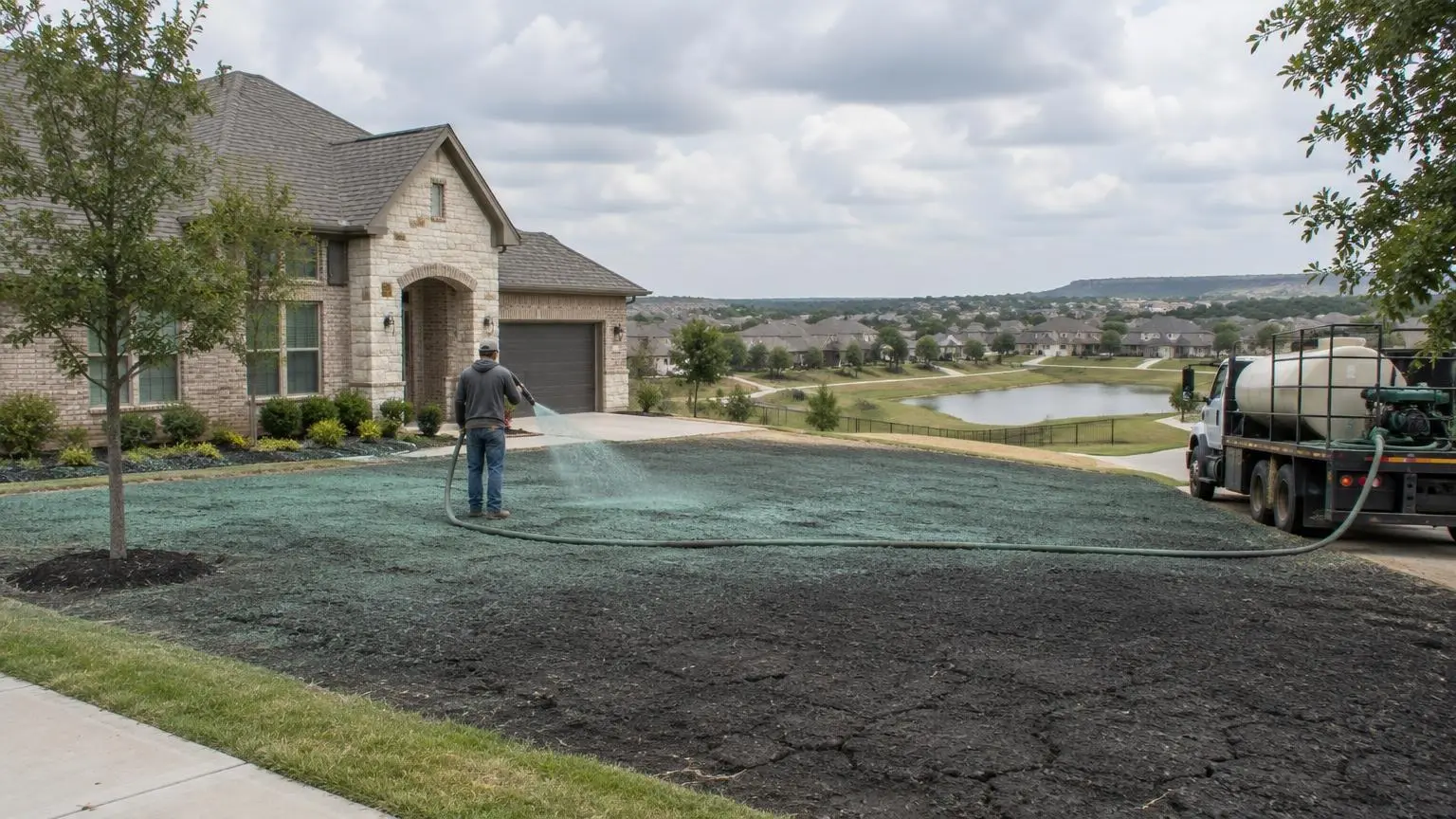
Hydroseeding in McKinney, TX
Old farm ground that now grows subdivisions, with spring as the wet season.
- No-cost site visit and a written quote
- Quotes split into prep, seed, mulch and erosion items
- Seed mix and timing planned for North Texas heat
From Cotton Fields to Front Yards
Hydroseeding in McKinney starts with the soil under it. The city sits in the Texas blackland prairies, named for dark, alkaline clay that shrinks and swells with moisture. That same soil made Collin County the sixth-largest cotton producer in the country by 1926. Today much of that farm ground is subdivisions, and the clay acts the same way under a lawn as it did under a crop.
Working with blackland clay
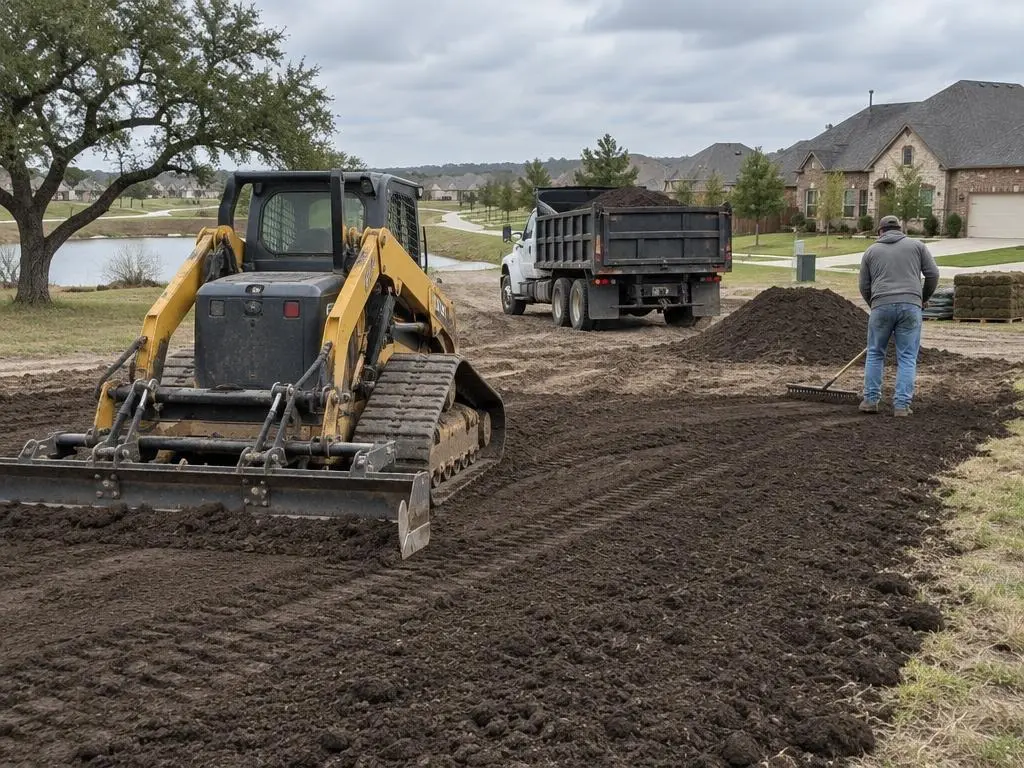
The clay cracks deeply in dry weather and turns sticky when wet. Seed sprayed onto cracked ground can fall into the gaps, and slurry on saturated clay can puddle. We loosen and fine grade the surface, add topsoil where the builder left raw subgrade, and seed when the ground is moist but workable.
Spring is the wet season
In McKinney, spring is the wettest part of the year, with Gulf winds bringing storms. That helps germination but also moves soil off bare lots. On new construction we get silt fence and inlet protection set ahead of the spring rains, and we spray hydromulch as soon as grading allows so the surface is covered.
A place for native seed
The Heard Natural Science Museum and Wildlife Sanctuary covers 289 acres, with more than 150 species of wildflowers and a 50-acre wetland. Homeowners on larger lots in rural north McKinney sometimes want part of a property in native grasses or wildflowers instead of turf. Native seeding needs a different mix and a different schedule, and we plan it separately from the lawn areas.
Growth that keeps going
The city grew from 54,369 people in 2000 to 195,308 in 2020. Builders still need erosion control on open phases, and homeowners in finished neighborhoods call us to repair thin turf after their first few summers.
We price lawn, builder and native seeding in writing after a look at the site. Get a free estimate or call (469) 210-5759.
McKinney Land Facts
- Blackland soil. Blackland prairie soils are black or dark-gray alkaline clay with vertisol properties that shrink and swell with moisture.
- Cotton history. Collin County became the sixth-largest cotton producer in the United States by 1926.
- Wet spring. Spring is the wettest time of year in McKinney, with winds bringing moisture from the Gulf Coast.
- Heard sanctuary. The 289-acre Heard sanctuary has more than 150 species of wildflowers and a 50-acre wetland.
- Population. McKinney had 195,308 residents in 2020, up from 54,369 in 2000.
McKinney Questions
Why does my McKinney yard crack in summer?
Blackland clay shrinks as it dries and opens deep cracks. Steady watering and a good topsoil layer help new grass ride through it.
Can you seed wildflowers on part of my McKinney property?
Yes. We prepare a separate native or wildflower area with its own seed mix and timing, apart from the lawn.
Is spring a good time to hydroseed in McKinney?
Spring rain helps seed sprout, but storms can wash bare ground. Erosion control goes in first so the rain helps instead of hurts.
Do I need topsoil on a new McKinney build?
Often. Builders sometimes leave compacted subgrade clay. A few inches of topsoil gives roots a much easier start.
Free Estimates in McKinney, TX
In McKinney we walk your lot at no charge and put the estimate in writing.
Hydroseeding Near McKinney
- Hydroseeding in Dallas, TX
- Hydroseeding in Frisco, TX
- Hydroseeding in Plano, TX
- Hydroseeding in Prosper, TX
- Hydroseeding in Celina, TX
- Hydroseeding in Rockwall, TX
- Hydroseeding in Allen, TX
- Hydroseeding in Garland, TX
- Hydroseeding in Rowlett, TX
- Hydroseeding in Wylie, TX
- Hydroseeding in Forney, TX
- Hydroseeding in Little Elm, TX
- Hydroseeding in Cedar Hill, TX
- Hydroseeding in Midlothian, TX
- Hydroseeding in Waxahachie, TX
- Hydroseeding in Mansfield, TX
- Hydroseeding in Grand Prairie, TX
- Hydroseeding in Flower Mound, TX
- Hydroseeding in Arlington, TX
- Hydroseeding in Mesquite, TX
- Hydroseeding in Lewisville, TX
- Hydroseeding in Denton, TX