
Named for a prairie hill
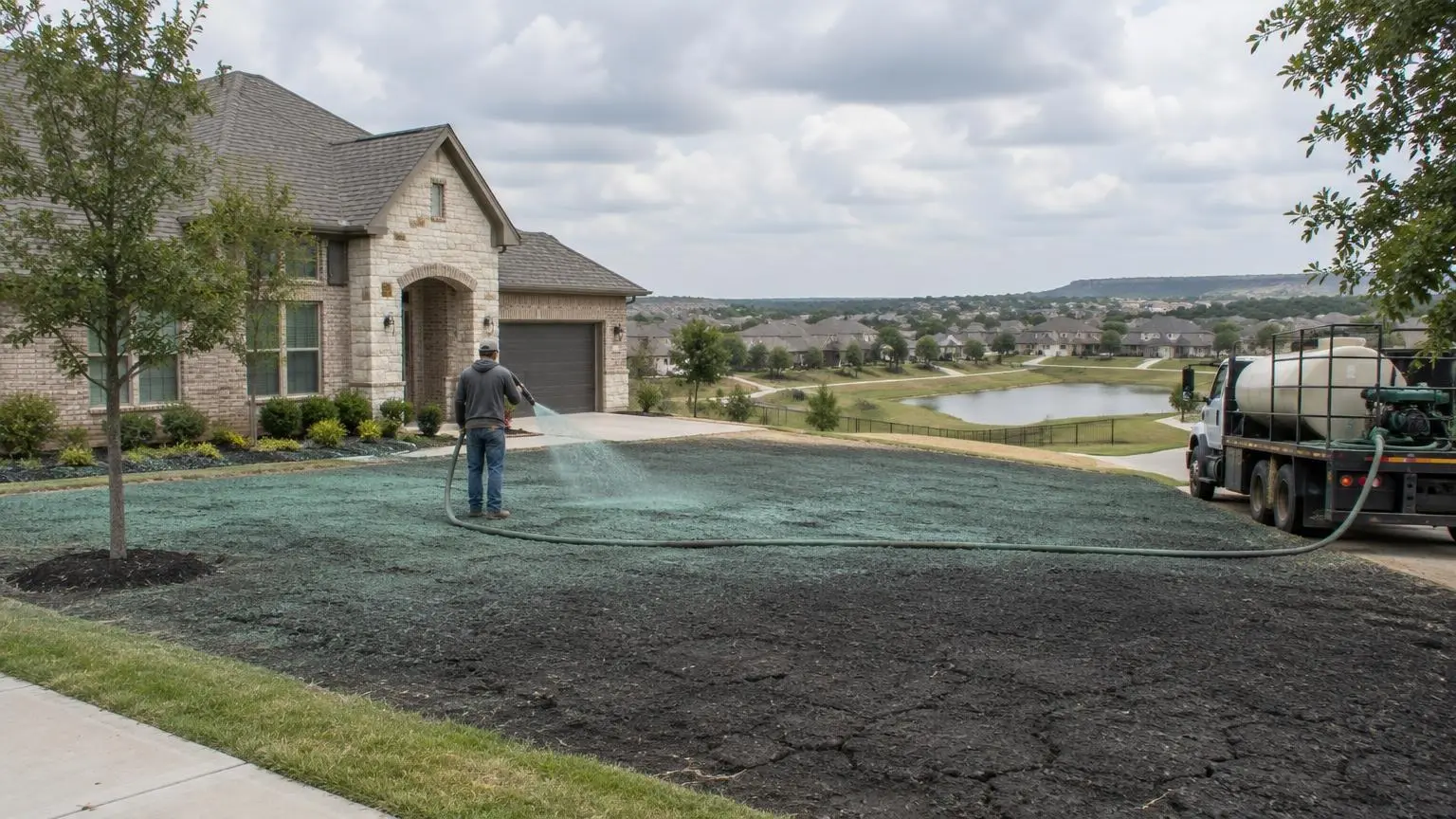
Hydroseeding in Flower Mound, TX
A town that keeps open space on purpose, and a prairie mound still in bloom.
- No-cost site visit and a written quote
- Quotes split into prep, seed, mulch and erosion items
- Seed mix and timing planned for North Texas heat
Seeding With Open Space in Mind
Hydroseeding in Flower Mound often comes with an eye on the landscape around the house. The town is named for a 12.5-acre hill about 50 feet tall near FM 3040 and FM 2499. The Mound is part of the Texas blackland prairies and is usually covered in big bluestem, little bluestem and Indian grass. In bloom season dozens of flower varieties grow on its slopes, helped by water held in gilgai formations in the prairie soil.
Conservation development
Flower Mound uses a smart growth approach and encourages conservation development that protects open space, vistas and natural habitat while allowing controlled growth. Many lots border preserved ground. On those properties, owners often want a turf lawn near the house and native grasses or wildflowers on the edges, which we can seed in one visit with separate mixes.
Grapevine Lake and Marshall Creek
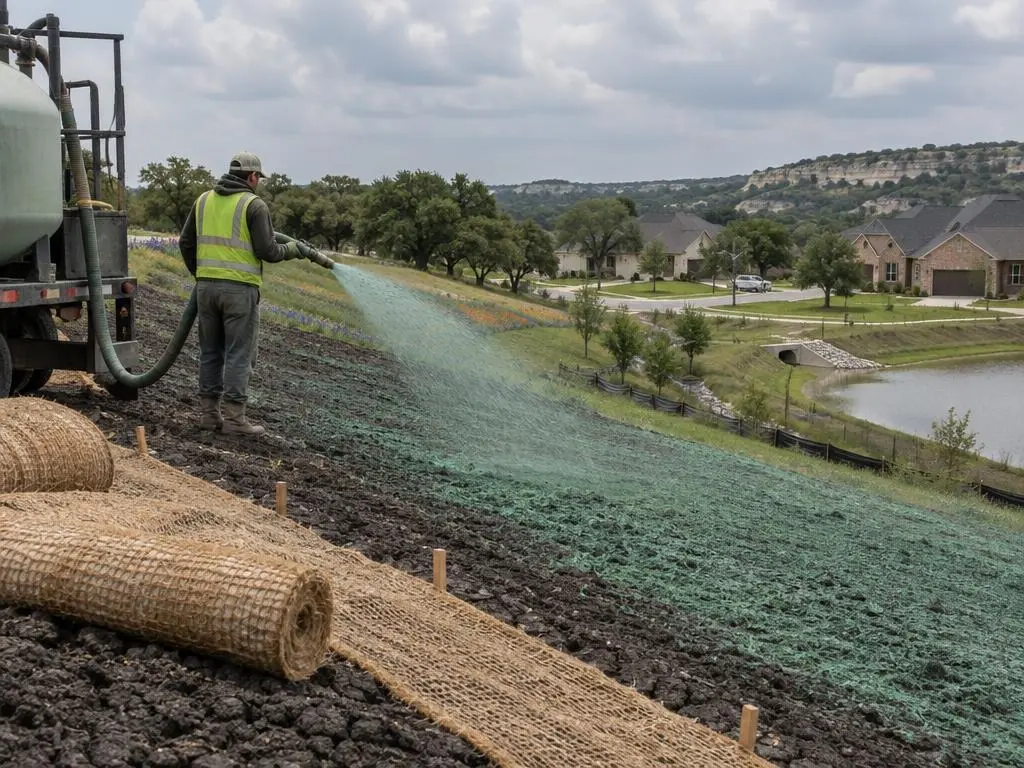
Grapevine Lake and Marshall Creek form much of the town's southern boundary. Lots that drain toward them need sediment control during grading and quick vegetative cover afterward. Steeper banks get erosion control blankets.
Growth that followed the airport
The opening of DFW Airport four miles south in 1974 set off rapid growth: the population rose from 4,402 in 1980 to 50,702 in 2000. Lawns installed during the 1990s boom are now twenty-plus years old and are ready for renovation or overseeding.
Western development
The 1,500-acre Denton Creek District on the west side and the Lakeside district near Grapevine Lake mean new construction continues. Builders there need silt fence, inlet protection and final hydroseed.
For lawn, native or builder seeding in Flower Mound, get a free estimate or call (469) 210-5759.
Flower Mound Landscape Facts
- The Mound. The town is named for a 12.5-acre hill about 50 feet tall, covered by big bluestem, little bluestem and Indian grass.
- Gilgai. Flowers on the Mound's slopes are often aided by water retained in gilgai formations.
- Southern boundary. Grapevine Lake and Marshall Creek form much of the town's southern boundary.
- Airport growth. After DFW Airport opened in 1974, the population grew from 4,402 in 1980 to 50,702 in 2000.
Flower Mound Questions
Can you seed native grasses like those on the Mound?
Yes. We can seed big bluestem, little bluestem and other native mixes on open areas, with turf grass nearer the house.
My Flower Mound lawn dates from the 1990s. Should I renovate?
If it is thin, uneven or weedy, a renovation with regrading and hydroseed often gives better results than more fertilizer.
Do lots near Grapevine Lake need erosion control?
Yes, during and after grading. Silt fence and fast cover keep soil out of the lake and Marshall Creek.
What are gilgai and do they affect my yard?
On the Mound they are formations that retain water and help flowers grow. In a lawn, any low hollow that holds water gets smoothed out during grading so it does not pond.
Hydroseeding Near Flower Mound
- Hydroseeding in Dallas, TX
- Hydroseeding in Frisco, TX
- Hydroseeding in McKinney, TX
- Hydroseeding in Plano, TX
- Hydroseeding in Prosper, TX
- Hydroseeding in Celina, TX
- Hydroseeding in Rockwall, TX
- Hydroseeding in Allen, TX
- Hydroseeding in Garland, TX
- Hydroseeding in Rowlett, TX
- Hydroseeding in Wylie, TX
- Hydroseeding in Forney, TX
- Hydroseeding in Little Elm, TX
- Hydroseeding in Cedar Hill, TX
- Hydroseeding in Midlothian, TX
- Hydroseeding in Waxahachie, TX
- Hydroseeding in Mansfield, TX
- Hydroseeding in Grand Prairie, TX
- Hydroseeding in Arlington, TX
- Hydroseeding in Mesquite, TX
- Hydroseeding in Lewisville, TX
- Hydroseeding in Denton, TX