
Thin and damaged lawns
Overseeding & Lawn Repair in Dallas, TX
Filling bare spots and tired turf back in, timed for when Bermuda can actually grow.
- No-cost site visit and a written quote
- Quotes split into prep, seed, mulch and erosion items
- Seed mix and timing planned for North Texas heat
Bringing a Worn-Out Lawn Back
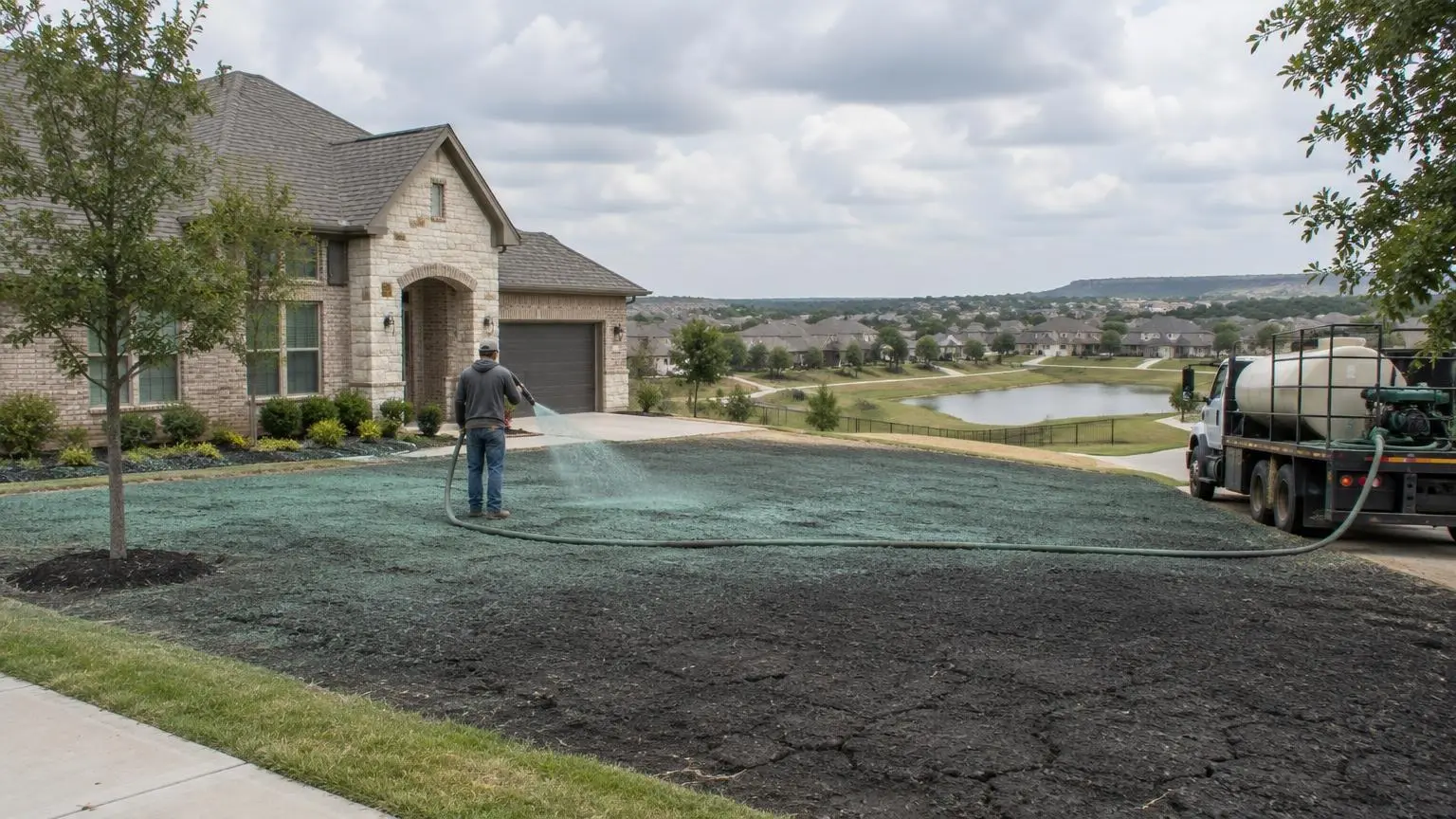
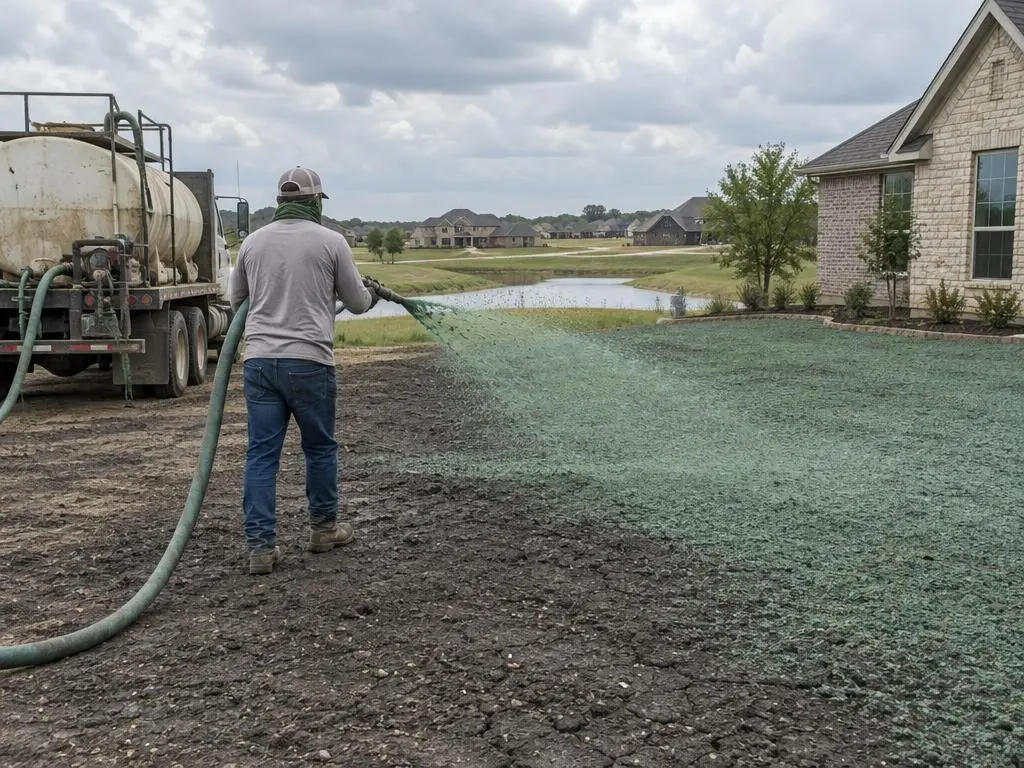
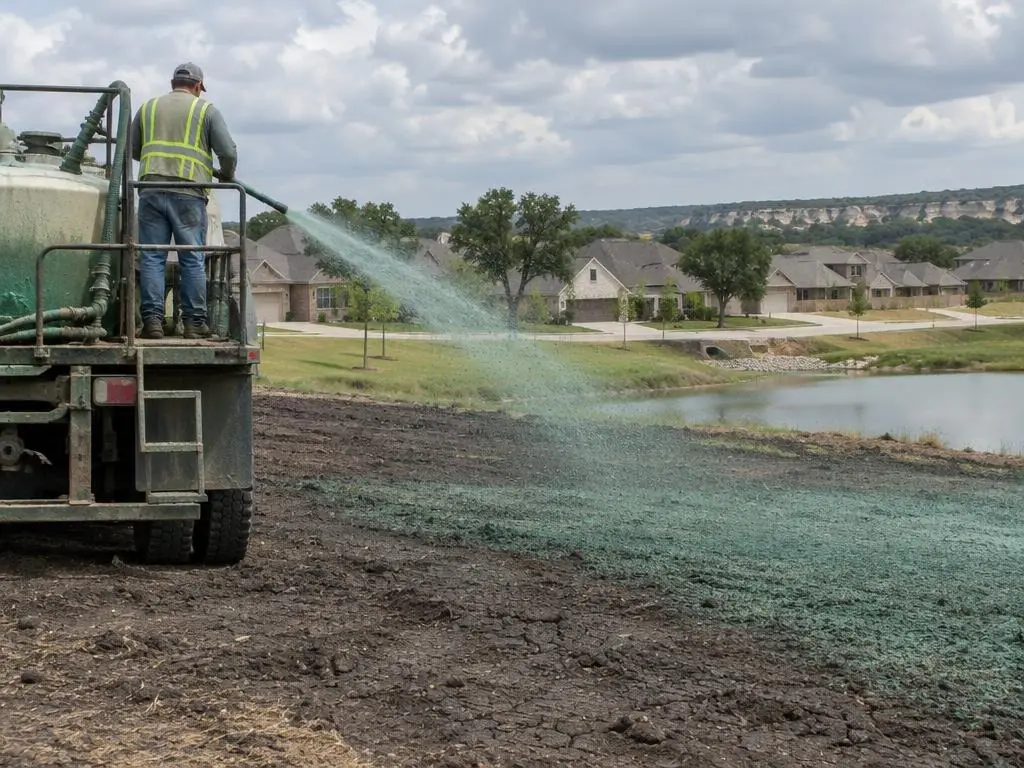
Overseeding and lawn repair is for Dallas yards that still have grass but not enough of it. Common reasons are drought stress, heavy shade creeping in as trees grow, dog runs, foundation or utility work that left a scar, and storm damage. We look at why the lawn thinned, fix the cause where we can, and then seed into the existing turf or into prepared bare patches. On large areas we use the hydroseeder; on scattered spots it can be aeration and seed. When most of the yard is gone, lawn renovation, stripping and reseeding the whole area, may be the better route.
Why Dallas lawns thin out
Bermuda, the usual sunny-lawn grass here, handles heat and drought better than most species, but it has limits. It grows actively above about 59 degrees and does best in heat, then goes dormant and light brown in winter. Dense shade suppresses it, so a lawn that was full under young trees can thin out as the canopy closes. Summer cracking in blackland clay can tear roots. And in a city where July and August average about 97 degrees with the least rain of the year, a lawn on a weak irrigation schedule often comes out of summer patchy.
Storm and freeze damage
Dallas sits at the lower end of Tornado Alley, and spring storms bring hail and torrential rain. Hail can shred turf, and flash runoff can scour bare strips. Hard freezes are uncommon but real: the airport dropped to minus 2 degrees in February 2021. Warm-season lawns that come out of a hard winter thin or slow to green up may need help in spring. We look at whether the grass is truly dead or just slow before recommending seed.
Timing for warm-season lawns
Overseeding a Bermuda lawn works when the grass is actively growing and the soil is warm, roughly from late spring through mid-summer here. The average last frost is around March 12, but it takes a few more weeks before soil warms enough for Bermuda seed. Fall seeding of Bermuda is risky because the first frost averages around November 12 and the young grass needs time to establish before dormancy. If you call in fall, we will usually suggest addressing soil and drainage now and seeding in spring.
Preparing for overseeding
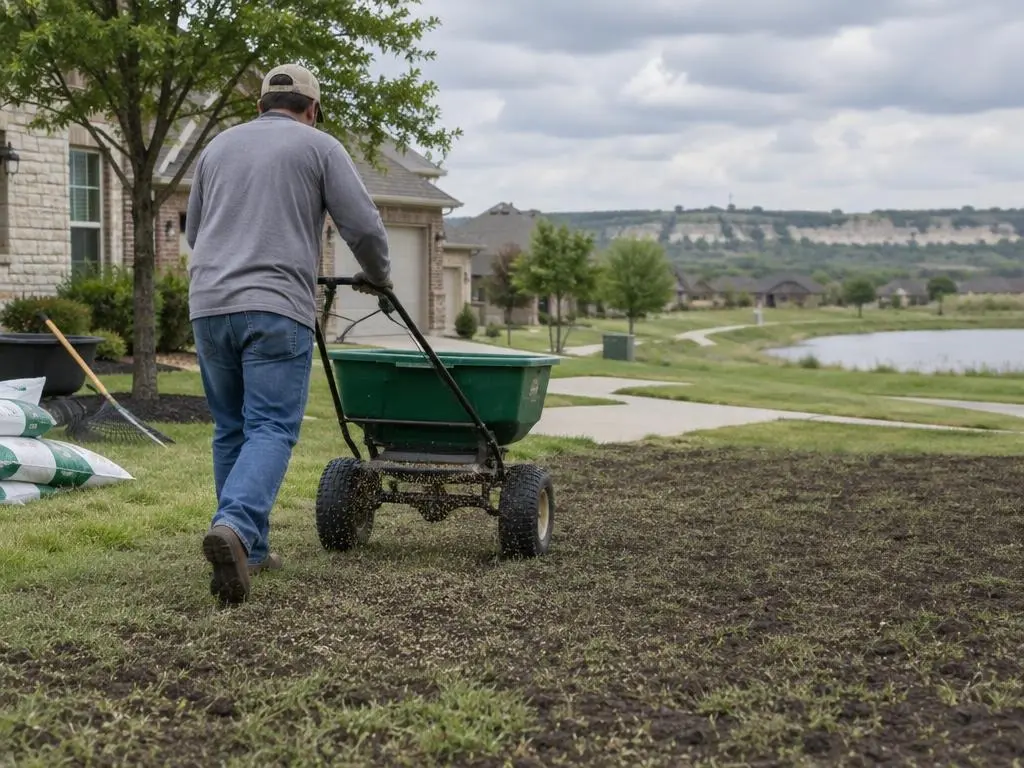
Seed thrown on top of thatch and hard clay mostly dries out. Before overseeding, we mow low, rake or dethatch where needed, and aerate compacted areas so seed reaches soil. Bare patches get loosened and, if they are subsoil, topped with a little topsoil. On larger bare areas we hydroseed so the mulch keeps seed moist. Fixing the cause, a sprinkler head that misses, a downspout that washes a strip, comes first.
Full renovation
Once weeds, bare dirt or the wrong grass take over roughly half of the lawn or more, patching usually costs more in the long run than starting over. Lawn renovation means killing or stripping the existing cover, correcting grade and soil, and seeding the whole area as a new lawn. It takes more time but gives a uniform result.
Overseeding after construction and repairs
A lot of lawn repair in Dallas follows other work. Foundation repair crews dig along the slab, irrigation contractors trench across the yard, fence crews trample a strip, and utility companies leave a seam of subsoil over a new line. Those scars are usually narrow but long, and they fill in slowly if left alone because the soil on top is compacted subsoil. We loosen the strip, bring it back to grade with topsoil where it has sunk, and seed it to match the surrounding lawn. On larger disturbed areas, hydroseeding gives a more even result than hand seeding because the mulch keeps seed moist across the whole strip. If several projects are planned, such as foundation work followed by new irrigation, it is usually cheaper to wait and repair the lawn once at the end. We are happy to look at the plan with you and suggest the order that saves the most seed, water and labor, then book the repair for the warm months when Bermuda can grow.
Aftercare
Overseeded areas need light, frequent watering until the new seed is up, then deeper and less frequent watering to push roots down before summer. Mow once the new grass is a few inches tall, and hold off on weed control products until the new seed is established. We leave written instructions for your yard. A lawn that gets fixed once, at the right time of year, almost always costs less than one that gets patched every season. Overseeding in the right window, on soil that has been loosened and fed, lets Bermuda spread by its own runners and fill the gaps between the seedlings, which is how a repaired lawn ends up looking like the rest of the yard.
Lawn Repair Options
From spot fixes to starting over.
Overseeding thin Bermuda
Seed into existing turf after mowing, dethatching and aeration.
Bare-patch hydroseeding
Prepared bare areas sprayed with seed and mulch.
Core aeration
Relieve compacted clay so water and seed reach the soil.
Hail and storm repair
Assess and reseed areas scoured or shredded by storms.
Shade area options
Discuss pruning, shade-tolerant options or beds where Bermuda will not hold.
Full lawn renovation
Strip, regrade and reseed when patching no longer makes sense.
Overseeding and Repair Price Ranges
| Work | Published range |
|---|---|
| Overseeding, per sq ft (Lawn Love) | $0.07 to $0.23 |
| Aeration plus overseeding, per sq ft (Fixr) | $0.08 to $0.25 |
| Professional lawn seeding visit (Angi) | $250 to $350 |
| Aeration alone (HomeAdvisor) | $100 to $400 |
| Lawn repair or renovation as a whole | No current published price; set once we measure |
Prices here come from national guides or a public rate schedule, not Dallas bids. How much prep, topsoil and seed your lawn needs changes the total, and the price on your signed quote is the one that counts.
How a Lawn Repair Goes
1. Diagnose
Figure out why the lawn thinned: shade, water, traffic, storm or soil.
2. Fix the cause
Adjust irrigation, drainage or traffic where possible.
3. Prepare
Mow low, dethatch, aerate, and loosen bare spots.
4. Seed
Overseed or hydroseed, depending on how much is bare.
5. Aftercare
Written watering and mowing plan for the new seed.
Why Choose Us for Overseeding & Lawn Repair
Cause first
We look for why the lawn thinned before we sell seed.
Warm-season timing
Bermuda gets seeded when it can grow, not when it cannot.
Right tool for the size
Spot seeding, aeration or hydroseed, depending on the damage.
Overseeding & Lawn Repair Questions
Can I overseed my Bermuda lawn in the fall in Dallas?
It is risky. Bermuda goes dormant in winter and the average first frost is around mid-November, so new seed has little time to establish. Late spring into summer is more reliable.
My lawn turned brown in winter. Is it dead?
Probably not. Bermuda goes dormant and turns light brown in cold weather. Wait for spring green-up before deciding what needs reseeding.
Should I repair or renovate the whole lawn?
If most of the yard is still good grass, repair and overseed. Once roughly half or more has gone to weeds or bare dirt, a full renovation is usually the better use of money.
Will Bermuda grow under my oak tree?
Dense shade suppresses Bermuda. Thinning the canopy can help, and in deep shade a bed or a different ground cover may work better than fighting it.
How much does lawn repair cost?
We did not find a current published price for repair as a whole. Cost guides put overseeding at about $0.07 to $0.23 a square foot, and we quote repair once we see the damage.
Overseeding & Lawn Repair Service Areas
- Hydroseeding in Dallas, TX
- Hydroseeding in Frisco, TX
- Hydroseeding in McKinney, TX
- Hydroseeding in Plano, TX
- Hydroseeding in Prosper, TX
- Hydroseeding in Celina, TX
- Hydroseeding in Rockwall, TX
- Hydroseeding in Allen, TX
- Hydroseeding in Garland, TX
- Hydroseeding in Rowlett, TX
- Hydroseeding in Wylie, TX
- Hydroseeding in Forney, TX
- Hydroseeding in Little Elm, TX
- Hydroseeding in Cedar Hill, TX
- Hydroseeding in Midlothian, TX
- Hydroseeding in Waxahachie, TX
- Hydroseeding in Mansfield, TX
- Hydroseeding in Grand Prairie, TX
- Hydroseeding in Flower Mound, TX
- Hydroseeding in Arlington, TX
- Hydroseeding in Mesquite, TX
- Hydroseeding in Lewisville, TX
- Hydroseeding in Denton, TX
Get an Overseeding & Lawn Repair Estimate
Send a few photos of the thin areas to get started.