
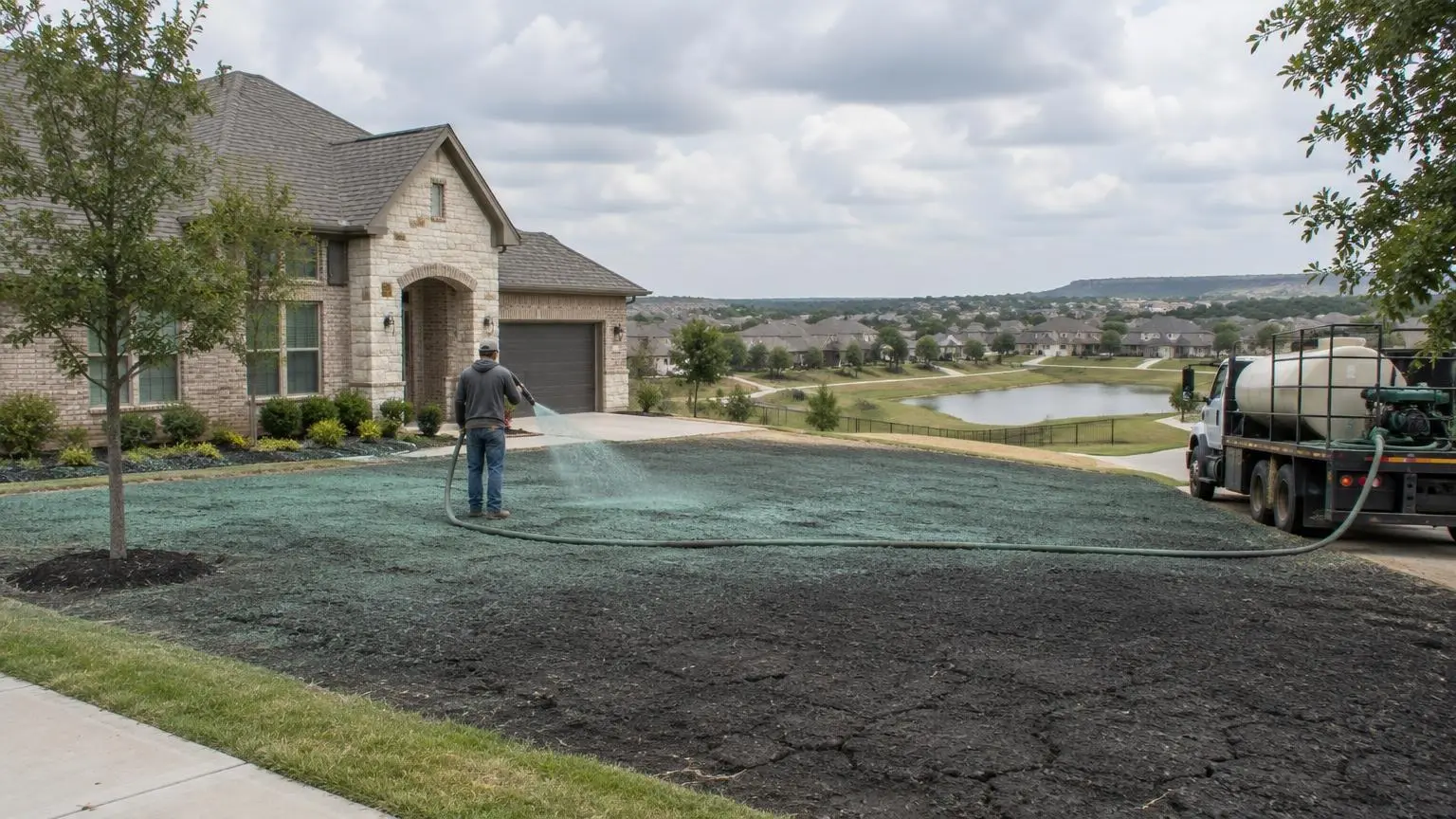
Dirt work before the seed
Fine Grading & Topsoil in Dallas, TX
A smooth, draining surface and real soil for roots, set up before we spray.
- No-cost site visit and a written quote
- Quotes split into prep, seed, mulch and erosion items
- Seed mix and timing planned for North Texas heat
Getting the Ground Right Before Anything Grows
Fine grading and topsoil work is the dirt work that makes a Dallas lawn or seeded slope succeed. Most failed seedings we look at did not fail because of seed. They failed because water sat in a low spot, ran off a hard crust, or soaked the house foundation. We do yard grading and land grading for new lawns, backyard rebuilds and builder lots: shaping the surface so water moves away from structures, loosening compacted clay, and spreading topsoil where the existing surface will not support roots. When a yard needs more than surface shaping, the same crew digs the excavation and trenching for drain lines.
Flat lots and slow water
Much of Dallas sits between 450 and 550 feet in elevation on gently sloping ground. On flat blackland clay, water does not move far without help, and clay drains slowly once it is saturated. A yard that is off by an inch or two in the wrong direction can pond for days after a May storm. Fine grading means building in enough fall to carry water off the foundation to a swale, the street or a drain, then smoothing out the low spots before seed goes down.
Shrink, swell and foundations
Blackland soils have vertisol properties, shrinking and swelling with moisture and cracking deeply in dry weather, which the soil literature notes can damage buildings and infrastructure. That makes the grade around a slab foundation more than a cosmetic detail. We keep soil below the grade the builder set at the slab, slope it away, and avoid creating areas where water collects against the house. If a foundation or drainage engineer has given specific grading instructions, we follow those.
Topsoil on construction dirt
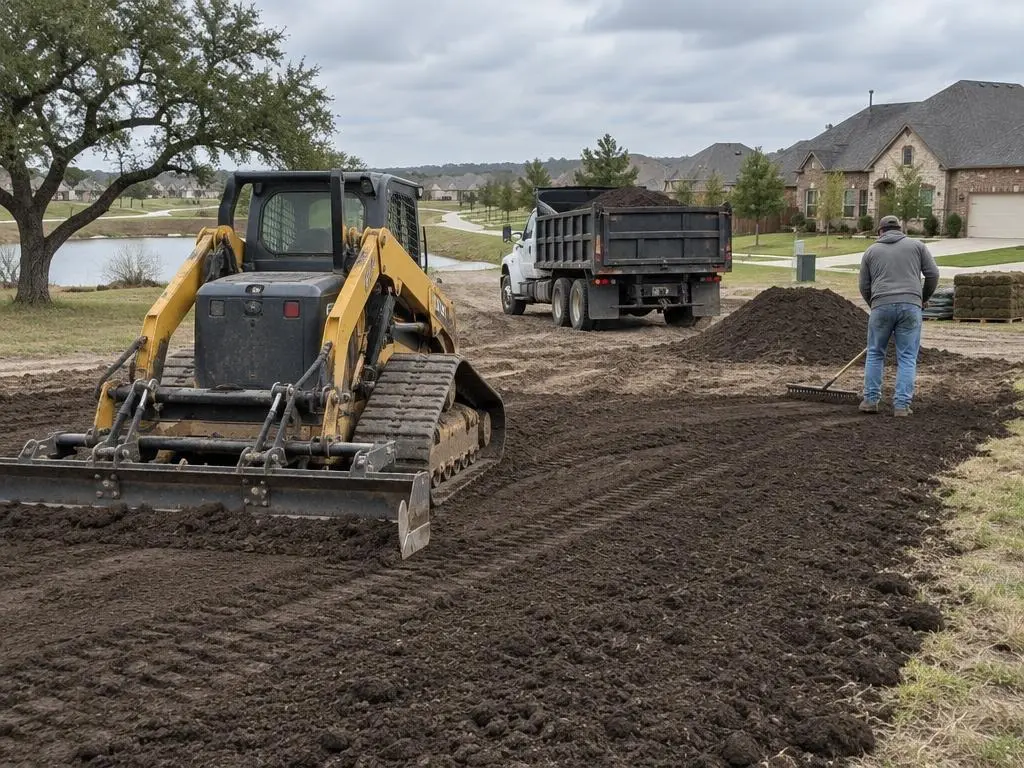
After a builder or pool crew is done, the top of the yard is often subsoil: dense clay, chunks of caliche or chalk, and construction debris. In the western part of the blackland belt, including escarpment areas south of the Trinity, soils can be shallow over chalk. New grass needs some loose, organic soil to root into. We spread screened topsoil over the thin or poor areas, blend it into the surface so it does not form a separate layer, and roll it lightly before seeding. How much you need depends on what is already there, so we measure and dig a few test spots on the visit.
When clay can be worked
Timing matters as much as equipment. Blackland clay worked wet sticks to tires and buckets and dries into hard clods; worked bone-dry it can be like concrete. We schedule grading for the window after rain when the soil crumbles in your hand. That sometimes means a few days of waiting after a storm, which saves weeks of trouble later.
Drainage beyond the surface
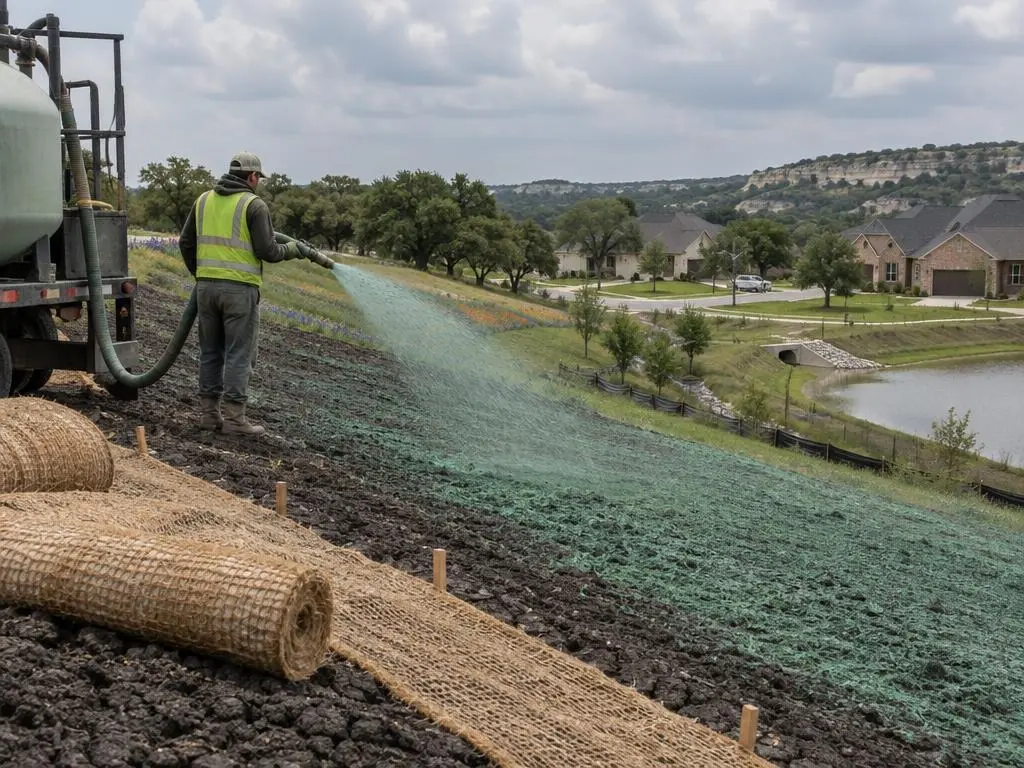
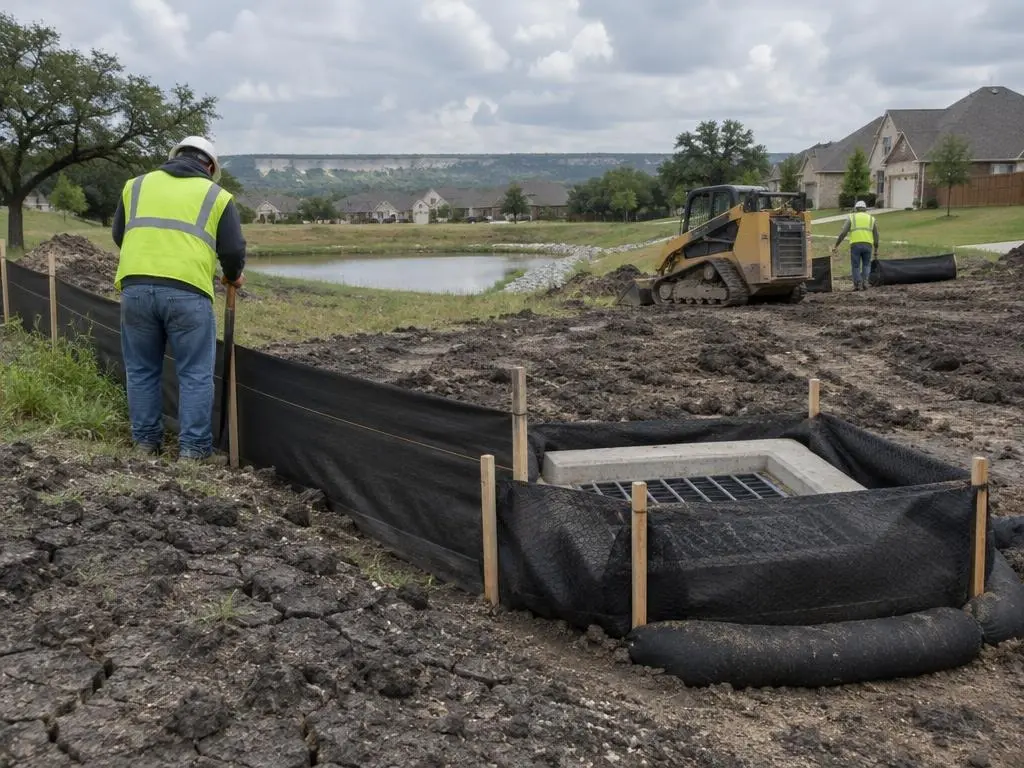
Reshaping the top few inches is not always enough. Where water comes from a neighbor's yard or a downspout with nowhere to go, we can cut a swale, add a trench drain or run a buried line to daylight. These are small excavation and trenching jobs, and we size them on the visit. Larger regrading of whole lots or new building pads is quoted separately by area.
Grading for new lawns versus repairs
On a brand-new home, fine grading means working from the builder's final grade: taking out tire ruts, spreading the leftover spoil piles, loosening the packed surface and getting the yard ready for seed in one pass. On an older Dallas property, grading is usually about fixing something that changed over time. Tree roots lift the surface, flower beds get built up against the slab, patios and additions block the old drain path, and the clay settles unevenly around utility trenches. Those yards need a closer look at how water moves today, not just how it was meant to move when the house was built. We walk the yard with you after a rain if possible, mark the low spots, and decide how much soil has to move and where it can go. Sometimes the answer is a few cubic yards of topsoil and a rake; sometimes it means cutting a swale along the property line. Either way the quote spells out the grading work, the topsoil quantity and any drain lines, each on its own line.
Ready for seed
When the grade is set and topsoil is in, the surface should be firm enough to walk on without deep footprints and loose enough on top to accept seed. That is the right condition for hydroseeding. We usually seed right after grading so a storm does not erode the new surface before it is covered. If your project needs a large volume of fill or a full building pad, we will tell you up front, since that is a different scale of dirt work than lawn prep.
Dirt Work We Handle
Surface shaping, soil and small drainage jobs.
Yard grading and reslope
Set the surface to move water away from the house and toward a drain path.
Fine grading for seed
Remove low spots, ridges and ruts and smooth the final surface.
Screened topsoil
Spread and blend over thin, subsoil or chalky areas.
Clay loosening
Break up compacted builder grade so roots and water can enter.
Swales and small drains
Cut swales and run trench drains or buried lines to daylight.
Debris cleanup
Pull rocks, concrete scraps and construction waste from the seedbed.
Grading and Topsoil Price Ranges
| Work | Published range |
|---|---|
| Leveling a lawn, per sq ft (HomeAdvisor) | $1 to $2 |
| Fine grading, per sq ft (Lawn Love) | $0.08 to $1.00 |
| Residential reslope project (Lawn Love) | $770 to $3,000 |
| Topsoil material, per cubic yard (Angi) | $10 to $55 |
| Angi: topsoil hauled in, a single load up to 15 cu yd | $50 to $150 |
| Spreading and grading labor, per hour (Angi) | $60 to $125 |
Prices here come from national guides or a public rate schedule, not Dallas bids. Soil quantity, access and how far dirt has to move change the total. We set the figure once we measure, and that written number is what you pay.
How Grading Work Goes
1. Survey the yard
Check slopes, low spots, drain paths and soil depth with test holes.
2. Plan the grade
Decide where water goes and how much topsoil is needed.
3. Rough and fine grade
Move soil, loosen clay, set slopes and smooth the surface.
4. Topsoil and roll
Spread and blend topsoil, then lightly roll.
5. Seed promptly
Hydroseed soon after so the new grade is protected.
Why Choose Us for Fine Grading & Topsoil
Grade for drainage
Water moves away from the slab and toward a real outlet.
Workable-clay timing
We grade when the soil crumbles, not when it smears.
Seed right behind
Graded ground gets covered quickly.
Fine Grading & Topsoil Questions
How much topsoil does a Dallas yard need before seeding?
It depends on what is there. A yard with decent surface soil may need only touch-ups, while builder subsoil or shallow chalk may need several inches. We dig test spots on the visit to decide.
Water sits next to my slab after every storm. Can grading solve that?
Often, by regrading so the soil slopes away from the slab and toward a swale or drain. If water comes from a downspout or a neighbor's yard, we may add a drain line.
Is yard grading the same as land grading?
They overlap. Yard grading usually means shaping a residential lot for drainage and lawn; land grading covers larger areas and pads. We do both on the scale a seeding job needs.
Do you haul away extra dirt?
Yes, if grading leaves surplus soil or debris, we can haul it. That is listed as its own line on the quote.
Fine Grading & Topsoil Service Areas
- Hydroseeding in Dallas, TX
- Hydroseeding in Frisco, TX
- Hydroseeding in McKinney, TX
- Hydroseeding in Plano, TX
- Hydroseeding in Prosper, TX
- Hydroseeding in Celina, TX
- Hydroseeding in Rockwall, TX
- Hydroseeding in Allen, TX
- Hydroseeding in Garland, TX
- Hydroseeding in Rowlett, TX
- Hydroseeding in Wylie, TX
- Hydroseeding in Forney, TX
- Hydroseeding in Little Elm, TX
- Hydroseeding in Cedar Hill, TX
- Hydroseeding in Midlothian, TX
- Hydroseeding in Waxahachie, TX
- Hydroseeding in Mansfield, TX
- Hydroseeding in Grand Prairie, TX
- Hydroseeding in Flower Mound, TX
- Hydroseeding in Arlington, TX
- Hydroseeding in Mesquite, TX
- Hydroseeding in Lewisville, TX
- Hydroseeding in Denton, TX
Get a Fine Grading & Topsoil Estimate
Describe the drainage problem or yard size to start.